Category: essays

  • Hallways

    For as long as I can remember, my dreams have had architecture.

    Not mountains. Not oceans.

    Hallways.

    Hospital corridors. Hotels. Schools I have never attended. Houses that belong to no one I know. Fluorescent lights. Closed doors. Numbers I cannot quite read.

    There is always another room. I am always trying to find it.

    Sometimes I know what is behind the door. Most of the time, I do not.

    Lately, I have begun to wonder whether I have spent my entire life this way—not in rooms, but between them.

    A hallway is not meant to be lived in. It exists only because there is somewhere else to go. No one chooses one as a destination. No one says, this is where I will stay.

    And yet, so much of my life has happened there: in waiting, in becoming, in the long, unfinished passage between one version of myself and the next.

    A few months after my father died of lung cancer in 2014, I had a dream.

    I was inside a hospital. People were moving quickly through the corridors, rushing in and out of rooms, carrying papers, calling to one another. There were doors everywhere.

    Someone stopped me and said they had pulled my father out for me. He was in a room down the hall.

    Room 214, maybe.

    A woman in scrubs caught my arm before I reached it.

    They had found a cure, she told me.

    Not for every cancer.

    For his.

    They had brought him back.

    Even in the dream, I knew this was impossible. My father had been cremated. I remember thinking it clearly.

    He was cremated.

    But I followed her anyway.

    Hope has never required evidence.

    He was lying in a hospital bed, thin and fragile, the oxygen cannula still beneath his nose. He looked exactly as I remembered him near the end.

    But he was breathing.

    That was all I could see.

    He was breathing.

    I went to him as if I had been handed a miracle and was afraid it might be taken back if I asked too many questions.

    I told him they had found a medicine. I told him it was saving people. I told him he did not have to die anymore.

    He looked at me.

    Then he reached for my hand.

    He had very little strength, but his fingers closed around my wrist with surprising force.

    “Let me rest,” he said.

    Then he turned onto his side.

    Underneath him were the ashes.

    All of them.

    Ashes beneath the body that was still breathing.

    I woke terrified.

    For years, I remembered the dream as a message about death. Now I am not sure it was.

    Maybe the hallway had been there all along.

    There have been many of them since: the corridor outside my father’s room, the hallway outside my sons’ bedrooms when they were still young enough to need me, the airport passage where one of them walked away in uniform and did not look like a child anymore, the narrow stretch of my own house after everyone has gone home, a restaurant after closing—chairs turned over, lights lowered, the day emptied out of it.

    Even now, I am often standing somewhere between what was and what comes next.

    Not grieving as I once did.

    Not free of it either.

    Not the woman I was.

    Not yet the woman I am becoming.

    A hallway.

    The cruel thing about hallways is that you can still see the door behind you. Sometimes you can still hear voices through it.

    But you cannot live there anymore.

    I have spent years trying to return to rooms that no longer exist: the room where my father was alive, the room where my sons were children, the room where I believed love, if it was deep enough, would eventually become honest, the room where I knew who I was.

    But memory is not a key.

    It opens nothing.

    It only lets you stand close enough to remember the shape of the handle.

    Maybe that is why my dreams keep building hallways.

    Rooms suggest arrival. They suggest certainty. They suggest that something has finally been decided.

    Hallways do not lie that way.

    They admit that we are between things. They admit that the person who enters is not always the person who comes out. They admit that sometimes there is no revelation on the other side.

    Sometimes there is only another corridor.

    Another number.

    Another door.

    I used to think transition meant I was lost. Now I think it may be the most honest place a person can stand—not where she was, not where she is going, but in the long passage between them.

    And perhaps that is why my dreams never give me a destination.

    I have spent so much of my life becoming someone else that my subconscious no longer bothers building rooms.

    It builds another hallway.

  • Living Tissue

    Literature, to me,
    is a living organism.

    Its pages are tissue.
    Its margins, skin.

    Every sentence
    makes an opening.

    This page has a pulse.

    It beats
    beneath your eyes.

    But it is also my house—

    the body
    my mind returns to
    when it has nowhere else
    to go.

    This is where it stops,
    where it rests,
    where it lays down
    what it has carried
    too long.

    A thought enters
    and removes its coat.

    A memory sits
    at the edge of the bed.

    What I cannot say aloud
    finds a room here.

    That is how we meet—

    through the fibers
    of the web,

    your eyes moving
    through the place
    where I have left
    pieces of myself.

    Mycelium

    Some readers arrive
    like stitches.

    Some arrive
    with clean hands
    and know instinctively
    where not to touch.

    Others come
    with no intention
    of being gentle,

    turning the wound
    toward the light
    to see
    what refuses
    to close.

    A page remembers
    every person
    who has handled it.

    It changes temperature.
    It alters its breathing.

    Sometimes
    it begins bleeding
    before the reader
    has reached the end.

    Coagulation
    is inconsistent.

    It depends
    on who found the wound—

    on whether they came
    to close it,
    to study it,
    or simply
    to watch it bleed.

    Perhaps you came
    only to read.

    Perhaps you did not know
    that reading
    is a form of touch.

    But now you are here,

    inside the house
    my mind built
    to survive itself.

    And for as long
    as you remain,

    the walls keep breathing.
    The page keeps beating.

    Somewhere between
    your eyes
    and my words,

    the distance
    becomes tissue.

  • Every Word I Wrote

    I could not hear him.

    I stepped away from my friends and pressed the phone closer to my ear.

    New Orleans continued around me.

    Music through an open doorway.
    Rain shining on the street.
    Someone laughing nearby.

    I asked him to repeat himself.

    I still could not hear him.

    Later, a message arrived.

    Something close to:

    I can’t do this with you anymore.

    I have forgotten every word he said.

    I remember every word I wrote.

    I had always been the one who left.

    I knew when the air had changed. I knew when affection had begun to turn into something else. I knew how to reach the door before anyone could close it behind me.

    But I had known him for decades.

    He belonged to the long history of my life, and I had mistaken history for proof.

    There had already been reasons to leave.

    I knew them.

    Still, I stayed.

    That was the part I could not forgive.

    Not that he ended it.

    That I had remained long enough for him to.

    That night, I went to Chuck’s Bar.

    I sat outside.

    By then, the screen had begun to divide itself in two. I remember closing one eye, trying to make the words stay where I put them.


    Chuck’s Bar

    I long to be something
    stronger

    than a woman

    who once loved you.

    September 6, 2015


    Four lines.

    Nothing about New Orleans. Nothing about the call. Nothing about the message.

    Only the wish to become someone else.

    For years, I believed the poem was about him.

    It was written against the woman who had stayed.

    I thought she had failed me. I wanted to become stronger than she was because I did not yet know how to forgive her.

    Years passed.

    He asked me to forgive him.

    I did.

    Today, we are friends.

    I still see him tenderly.

    That would have been impossible to the woman sitting outside Chuck’s Bar, closing one eye against the doubled screen.

    She hated him.

    God, she hated him.

    But time returned him to his proper size.

    When I read those four lines now, I no longer hear a woman asking to become stronger.

    I hear a woman leaving herself a way back.

    I have forgotten every word he said.

    I remember every word I wrote.

  • Point of Entry

    People ask me about technique.

    I disappoint them.

    I have never sat down
    to write a poem
    thinking about meter
    or form
    or whether the line
    should break here
    instead of there.

    That does not mean
    those things do not matter.

    It means they were never
    my point of entry.

    I don’t write
    because I understand
    what I’m feeling.

    I write
    because I don’t.

    I don’t know where a poem begins.

    I only know
    that sometimes
    I write a sentence
    and spend years
    becoming the person
    who can understand it.

    Maybe that is where the poem begins.

    Not in clarity.

    In the private disorder
    language has not yet learned
    how to hold.

    The poem arrives before the explanation.

    Before the lesson.

    Before the clean version
    people prefer
    after pain has been made useful.

    I do not trust that version.

    I trust the fragment.

    The unfinished sentence.

    The line that breaks
    because something in me
    cannot continue
    without silence.

    That is technique too.

    Not the kind I studied.

    The kind the body invents
    when the mind
    has no argument left.

    The poem knows before I do.

    It knows where I am hiding.

    It knows what I am circling.

    It knows the truth
    before I can survive
    saying it plainly.

    That is why I write this way.

    Not to confess.

    Confession suggests
    I have arrived somewhere
    with evidence in my hands.

    Most of the time
    I have not arrived.

    Most of the time
    I am still standing
    inside the question.

    And the poem—
    if it is honest—
    does not answer it.

    It simply stays there
    with me

    long enough
    for something true
    to recognize itself.

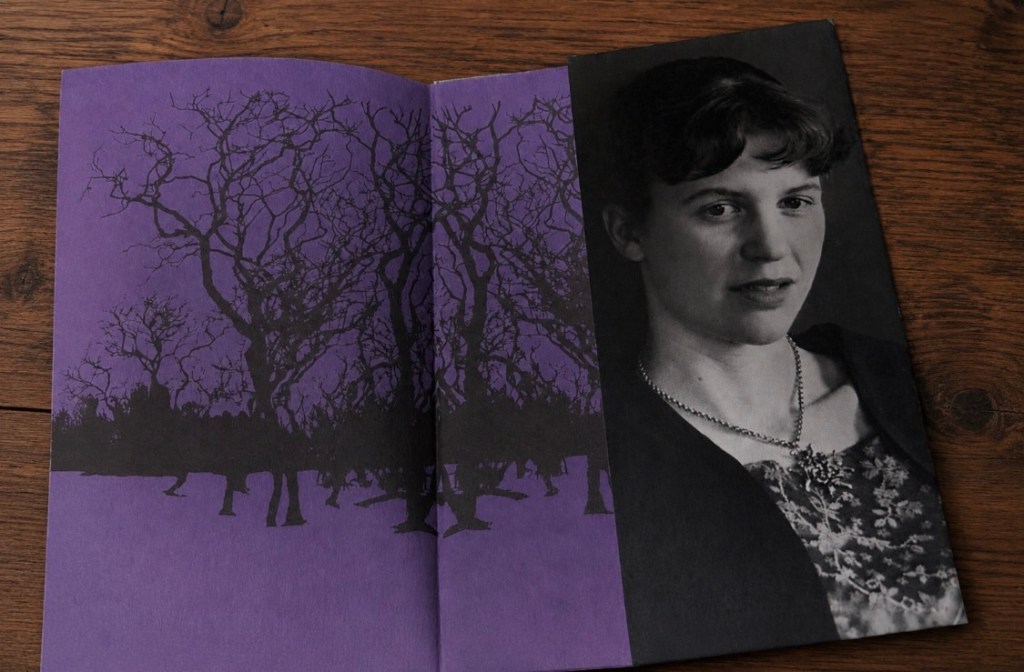
  • Why Plath

    People ask me why Sylvia Plath.

    The answer has never been the same.

    I didn’t discover her all at once. I found her in pieces, in used bookstores on the East Coast when I was in my twenties and still believed a book could explain me back to myself.

    The poems.
    The novel.
    The journals.
    The letters.

    I have lived with Sylvia Plath on my shelves for decades.

    What fascinates me now is that I have never read the same Sylvia Plath twice.

    The woman who first opened those books in her twenties is gone. So is the woman who returned to them in her thirties, and again in her forties.

    The books never moved.

    I did.

    That is the strange thing about certain writers. They stay exactly where you left them, waiting for you to become another woman.

    People often assume I loved Plath because of the darkness.

    I didn’t.

    I loved her because she refused to pretend the darkness wasn’t there.

    There is a difference.

    Here was a woman who seemed to do everything right.

    She married.
    She had children.
    She wrote.
    She built the life women were expected to want.

    And still.

    There was an inner life that refused to be resolved.

    That was the part I never got over.

    The way a woman can do all the right things and still remain suspended within herself.

    Maybe that is why I understood her before I knew how to explain myself.

    I have not opened one of her books in years.

    Not because I stopped loving her.

    Because I survived many things with Sylvia Plath.

    And surviving is not the same as staying.

    I think that is what literature does if you live long enough.

    It does not change.

    You do.

    And every time you return to it, it hands you a different version of yourself.

    The greatest gift Sylvia Plath gave me was never only her words.

    It was knowing someone had reached those dark, suspended places before me and left language there.

    So when I arrived, I did not feel entirely alone.

    Thirty years later, her books are still on my shelf.

    I don’t think I’ve been keeping them.

    I think they’ve been keeping parts of me.

  • No Patience for Plath

    My mother says I cannot speak like a normal person. She says every conversation with me turns into a metaphor with no parking.

    “Talk to me like a human being,” she says. “I don’t need a poem. I asked you a question.”

    And I laugh, because she is right.

    Then I tell her, “Well, I’m not human. So why would I speak to you like one?”

    This, of course, does not help.

    She looks at me like I have personally insulted common sense.

    “Enough.”

    “Speak normally.”

    But somewhere along the way, my thoughts stopped walking in straight lines. They started taking the scenic route, turning left where everyone else would have simply answered.

    And please understand—

    this is incredibly amusing to me.

    Because my mother is not a woman without language. No. My mother has language. She can say one sentence and make it sound like a door being thrown open during a storm.

    So when she tells me not to speak in poetry, do you understand how funny that is?

    This woman, who can slice the air with one sentence, wants me to hand her plain bread.

    I own the entire collection of Sylvia Plath.

    Every book.

    Every page.

    Every bruise.

    I have not opened a single one in over a decade. Not because I stopped admiring her. I didn’t.

    It is just that somewhere along the way, those books became less about Sylvia Plath and more about my mother.

    Once, while we were rearranging books, I left my Sylvia Plath collection on the coffee table. My mother and I both own a ridiculous number of books, but I do not write in mine. I do not underline. I leave the pages alone.

    So when I came back and saw ink on Sylvia Plath, I almost left my body.

    My mother had underlined things.

    Not gently.

    Not in pencil.

    Ink.

    On the page.

    In my book.

    As if Sylvia Plath had not already suffered enough.

    Then she looked at me and asked, “Does this make any sense to you?”

    And I said, “Well, you have to look at her from where she was standing.”

    My mother shook her head.

    “This is the most heartbreaking thing. There is no joy in these books.”

    And I was upset.

    Obviously.

    Because again,

    actual ink.

    But I also laughed, because somehow my mother had managed to vandalize Sylvia Plath and prove my entire point at the same time.

    Ever since that day, I have quoted Sylvia Plath to my mother every chance I get. Not because I’m feeling particularly Plath-like. Not always.

    Sometimes I do it simply because she underlined my books.

    This is what you get.

    You touch my Sylvia Plath, and now you have to live with Sylvia Plath.

    Forever.

    Every now and then, she’ll ask, “What are you doing today? What plans do you have?”

    And instead of saying work, errands, laundry, coffee, like a normal daughter, I’ll answer,

    “I desire the things which will destroy me in the end”

    She closes her eyes.

    And I smile, because she knows.

    This has nothing to do with today.

    This is an old debt.

    The punishment for underlining my books.

    And I have every intention of collecting it for the rest of her life.

    My mother has no patience for Sylvia Plath.

    To me, she is a poet.

    To my mother, she is a weather warning. A pressure drop. A room losing air. An anxiety rash waiting to happen.

    The kind of poet who makes my mother’s soul reach for antihistamines.

    Too much ache.

    Too much bell jar.

    Too much woman

    making pain
    answer back.

    So when my mother tells me not to speak in metaphors, I try.

    I really do.

    But I don’t know where normal ends and language begins.

    I have never been fluent
    in ordinary.

    My mind

    has always preferred

    the long way home.