Sometimes
I just want to tell you
hold me for a second.
That’s all.
I need another body
to tell me
where mine is.
I know how that sounds.
So I fix my hair.
Keep talking.
Ask you something
about your day.
You answer.
I nod
in all the right places.
Sometimes
I just want to tell you
hold me for a second.
That’s all.
I need another body
to tell me
where mine is.
I know how that sounds.
So I fix my hair.
Keep talking.
Ask you something
about your day.
You answer.
I nod
in all the right places.
I left my keys
in the lock
all night
then spent the morning
looking for them.
Are you dissociating
like me
or have we all
started leaving
before we go?
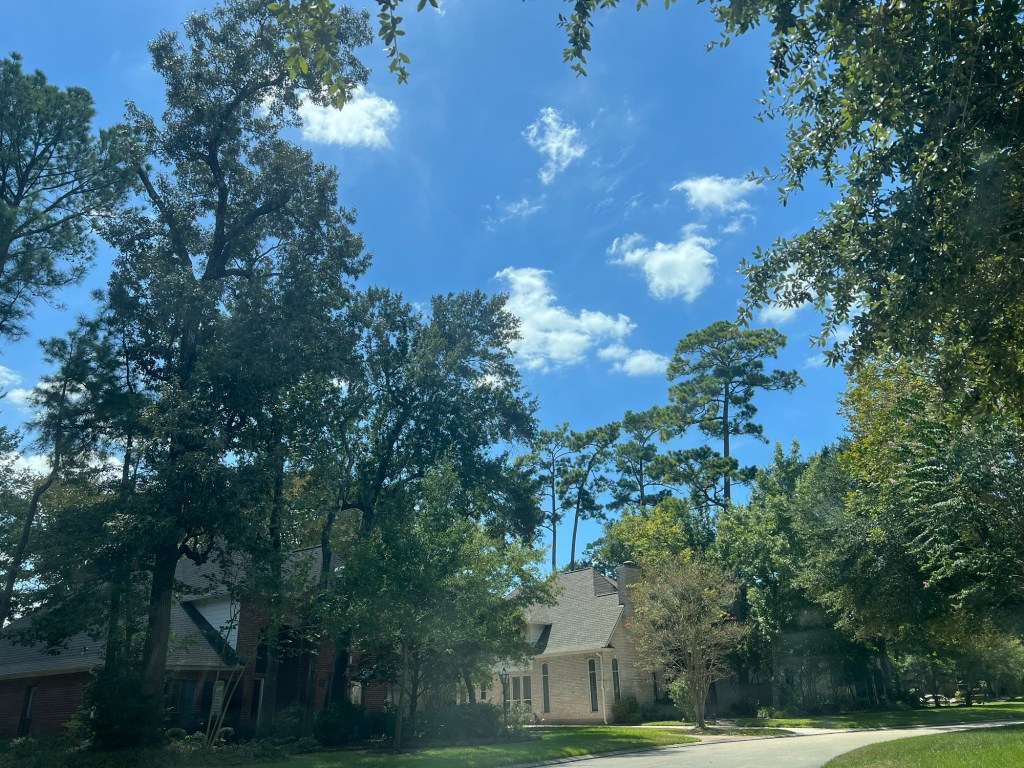
Bricks. Roof. Trees. Sky.
Beige. Green. Blue. White.
Four tangible things.
I was taught this fifteen years ago, and somehow I have carried it everywhere since. When panic comes, look outward. Name what is real. Give the mind something it cannot argue with.
A roof is a roof. A tree is a tree. The sky is blue.
Start there.
Inhale slowly. Exhale longer.
Again.
Panic is strange because even when you know exactly what it is, your body does not care.
My mind says, I know this feeling.
My body takes longer to trust me.
So I pull over.
I park beneath a tree, lean the seat back, and wait. Because that is what you do. You wait for your body to catch up with what your mind already knows.
You are okay.
You are okay.
You are okay.
And then panic does this other strange thing to me.
It takes me backward. Not to one particular day, but to that old maternal terror of loving something I cannot control.
That fear.
The one that says, fix it, fix it, fix it, even when there is nothing you can fix in that exact second.
It makes me younger somehow.
Not in years.
In fear.
So I do not follow it there.
Bricks. Roof. Trees. Sky.
Come back.
There is a bird in the tree above me. I watch it flap its wings, chirp, move from one branch to another. Its entire purpose, for that moment, is exactly that.
And I envy it.
Not because it is free.
Because it is only where it is.
No yesterday. No next thing. No inventory of everything that could go wrong.
Just branch.
Wing.
Sound.
Gone.
Birds are fleeting that way.
Maybe that is why I notice them when I am afraid. They arrive without explanation and leave before I can ask anything of them.
And for a second, I follow that instead.
My breathing gets better. I can feel myself coming back into my body.
And then I cry.
Not because I am more afraid.
Because I am not.
Because sometimes after all that fear, there is nowhere for it to go except out.
So I let it.
I write this down quickly because later I know what I will do. I will be fine. I will get up. I will drive. I will go do whatever comes next.
And I will say, I had a panic attack, as though those four words could possibly explain what it felt like while I was inside it.
So I write it now.
Before I make it smaller.
Before I forget the fear.
Before I forget the relief.
The tree.
The breath.
The bird.
Bricks. Roof. Trees. Sky.
Come back.
The bird lifts from the branch.
And I do too.
I have never told a man
I loved him first.
Not because I didn’t.
Because I believed
love should recognize itself
before it had to be named.
I thought if it was true
it would arrive on your lips
before it ever reached mine.
Then you happened.
For the first time
I wanted to say it.
I carried those words
like water in my mouth
afraid that if I spoke
I would lose
both the water
and the thirst.
So I said nothing.
Instead, I loved you like the wind
the wind that finds your face
before you have opened your eyes
that moves through your hair
and catches in your breath
leaving you to wonder
what your heart remembered
that your mind could not name.
It hurts to love you
because the feeling is real
and has nowhere to go.
No place in your life
where it can remain.
So I carry it into mornings
into songs I cannot finish
into every quiet place
that still makes room for you.
I have questioned everything else
my judgment
my timing
the meaning of your silence.
But never this.
Never the love.
I only wanted one impossible thing:
for you to know
that somewhere in this world
you were loved
by a woman who had never told a man
she loved him first
and still could not bring herself
to tell you.
So if, on some ordinary morning
the wind finds your face
lingers for just a moment
and catches in your breath
let it be enough.
Let it carry the words
I could not.
Do you remember being a fetus?
Neither do I.
But once
I lived inside my mother.
I knew her first
without seeing her.
The sound of blood moving.
Her heart somewhere above me.
The strange underwater version
of her voice.
I wonder what laughter sounded like
from in there.
Whether it shook the water.
Whether sadness did too.
Whether I knew the difference.
When she walked
the whole world moved.
When she slept
I disappeared into her sleep.
I went everywhere she went
without knowing
there was anywhere else to go.
I had never seen light.
Never felt air
against my skin.
Never been alone.
I knew her
before I knew what a mother was.
Before I knew
there could be distance
between one body
and another.
There must have been
a last night inside her.
This is the part
I keep thinking about.
A last night
when I still lived
entirely inside another person
and neither of us
called it goodbye.
Then morning came.
And for the first time,
her voice
was no longer underwater.
Sometimes I am tired of being me.
I have been with myself
for as long as I can remember
and I have never learned
how to leave myself alone.
I notice everything.
A change in someone’s voice.
A silence that lasts too long.
Something I said three days ago
that no one else remembers.
I return to things
that have already ended
as though there might be something there
I missed the first time.
There usually is.
That is part of the problem.
I have made myself uncomfortable
for as long as I can remember.
I don’t know when I began
watching myself this closely.
I am tired of my own reflection
not because I hate the woman in it
but because I never simply let her exist.
I am always doing something to her.
Fixing.
Forgiving.
Remembering.
Reconsidering.
Even inside my own body,
I move the furniture.
I turn her face toward the light
and then away from it.
I look too closely.
At my face.
My body.
My age.
The things I should have done differently.
The people I should have stopped missing
a long time ago.
Nothing in me
is ever allowed to simply be.
Not even happiness.
I examine that too.
How long will it last?
What will ruin it?
Who will leave?
I ask too much of her.
Be younger.
Be wiser.
Be less afraid.
Stop missing people
who can live without you.
Stop needing answers
from people who have chosen silence.
Stop going back
to the exact place something hurt
just to see if it still does.
It does.
I go back anyway.
Sometimes I wonder
when I became someone
I was responsible for correcting.
When did I stop being a person
and become a problem
I was always trying to solve?
She has carried every version of me
without ever being allowed
to put one down.
And still,
I stand in front of her
looking for what needs fixing.
She must be exhausted.
I know I am.
I have been thinking about the terrible fact
that people can become unreachable
while still being alive.
There should be another word for this.
Death is too complete.
This is something else.
This is knowing someone is somewhere
washing their hands,
looking for their keys,
standing in front of an open refrigerator
deciding what they want—
and not knowing
if you cross their mind at all.
And why do I torture myself this way?
As if I cannot see myself in a mirror.
As if I need someone else’s eyes
to tell me I am still here.
I stand in front of myself every morning.
Same face.
Same mouth.
Same body that has carried me
through every terrible thing
I was certain would finish me.
And still,
one person’s silence
can make me question
everything I know about myself.
This embarrasses me.
Not because I loved.
I have never been ashamed of that.
But because I keep returning to the silence
as if it contains an answer.
Was I too much.
Was I not enough.
Was it my body.
Did something in me become disappointing
once it became real.
Look at me.
I want to say this to myself.
Look at yourself.
You have a mirror.
You have lived inside this body
for more than half a century.
You know what it survived.
You know how many times
it had to become yours again.
And still,
I stand there
looking directly at myself
and somehow
I am waiting for someone
who is not here
to tell me
what he sees.
I once believed in a bay leaf.
I wrote what I wanted
on its dry green body.
A name.
A wish.
Sometimes only a word.
Then I burned it.
I watched the edges curl inward
the leaf blacken
the handwriting vanish
before the wish did.

I have believed in candles.
In numbers appearing twice.
In dreams arriving before dawn.
In songs playing at exactly the wrong moment
and therefore meaning something.
I have asked the dead for signs.
I have left coffee
where no living person would drink it.
But the bay leaf—
I believed in that one.
Maybe because it came from the kitchen.
Because it was ordinary.
Because it had spent its whole life
being dropped into pots
to make something taste deeper
without ever being eaten.
There are things I wrote on those leaves
that never came true.
People who did not stay.
Doors that remained closed.
Bodies that did not heal.
Love that arrived
and still could not belong to me.
I used to wonder
if I had done something wrong.
Used the wrong ink.
Burned it incorrectly.
Asked for too much.
Still—
every once in a while
I open the cabinet
and see the little glass jar.
Dry leaves
pressed against one another.
Quiet.
Waiting.
And for one second
I become the woman I was—
the one who believed
the distance between wanting something
and having it
could be crossed
with a match.
People ask me about technique.
I disappoint them.
I have never sat down
to write a poem
thinking about meter
or form
or whether the line
should break here
instead of there.
That does not mean
those things do not matter.
It means they were never
my point of entry.
I don’t write
because I understand
what I’m feeling.
I write
because I don’t.
I don’t know where a poem begins.
I only know
that sometimes
I write a sentence
and spend years
becoming the person
who can understand it.
Maybe that is where the poem begins.
Not in clarity.
In the private disorder
language has not yet learned
how to hold.
The poem arrives before the explanation.
Before the lesson.
Before the clean version
people prefer
after pain has been made useful.
I do not trust that version.
I trust the fragment.
The unfinished sentence.
The line that breaks
because something in me
cannot continue
without silence.
That is technique too.
Not the kind I studied.
The kind the body invents
when the mind
has no argument left.
The poem knows before I do.
It knows where I am hiding.
It knows what I am circling.
It knows the truth
before I can survive
saying it plainly.
That is why I write this way.
Not to confess.
Confession suggests
I have arrived somewhere
with evidence in my hands.
Most of the time
I have not arrived.
Most of the time
I am still standing
inside the question.
And the poem—
if it is honest—
does not answer it.
It simply stays there
with me
long enough
for something true
to recognize itself.
My mother says I cannot speak like a normal person. She says every conversation with me turns into a metaphor with no parking.
“Talk to me like a human being,” she says. “I don’t need a poem. I asked you a question.”
And I laugh, because she is right.
Then I tell her, “Well, I’m not human. So why would I speak to you like one?”
This, of course, does not help.
She looks at me like I have personally insulted common sense.
“Enough.”
“Speak normally.”
But somewhere along the way, my thoughts stopped walking in straight lines. They started taking the scenic route, turning left where everyone else would have simply answered.
And please understand—
this is incredibly amusing to me.
Because my mother is not a woman without language. No. My mother has language. She can say one sentence and make it sound like a door being thrown open during a storm.
So when she tells me not to speak in poetry, do you understand how funny that is?
This woman, who can slice the air with one sentence, wants me to hand her plain bread.
I own the entire collection of Sylvia Plath.
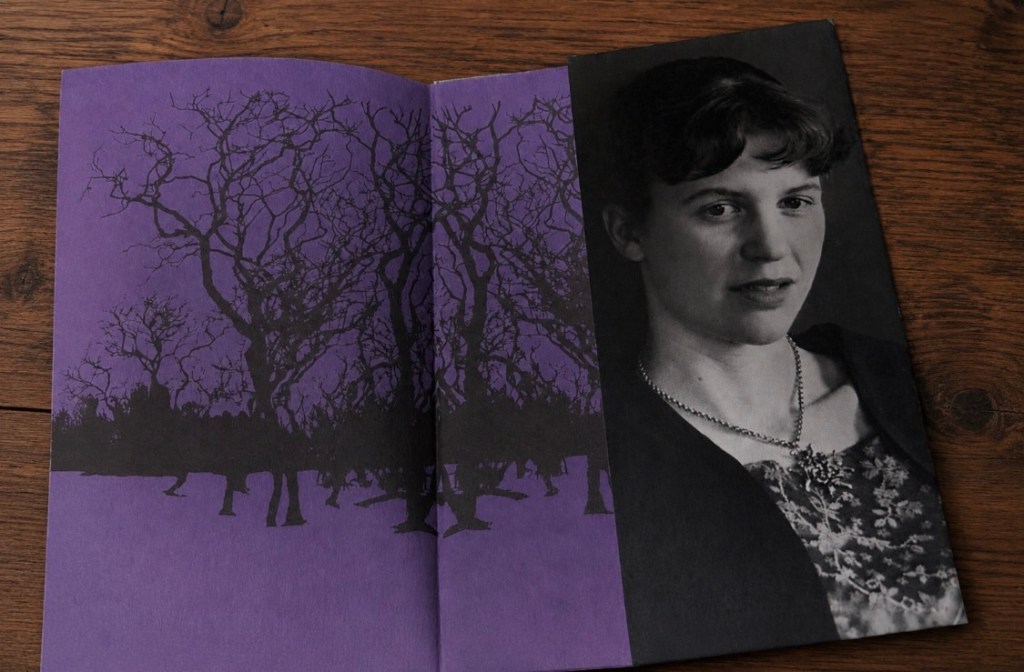
Every book.
Every page.
Every bruise.
I have not opened a single one in over a decade. Not because I stopped admiring her. I didn’t.
It is just that somewhere along the way, those books became less about Sylvia Plath and more about my mother.
Once, while we were rearranging books, I left my Sylvia Plath collection on the coffee table. My mother and I both own a ridiculous number of books, but I do not write in mine. I do not underline. I leave the pages alone.
So when I came back and saw ink on Sylvia Plath, I almost left my body.
My mother had underlined things.
Not gently.
Not in pencil.
Ink.
On the page.
In my book.
As if Sylvia Plath had not already suffered enough.
Then she looked at me and asked, “Does this make any sense to you?”
And I said, “Well, you have to look at her from where she was standing.”
My mother shook her head.
“This is the most heartbreaking thing. There is no joy in these books.”
And I was upset.
Obviously.
Because again,
actual ink.
But I also laughed, because somehow my mother had managed to vandalize Sylvia Plath and prove my entire point at the same time.
Ever since that day, I have quoted Sylvia Plath to my mother every chance I get. Not because I’m feeling particularly Plath-like. Not always.
Sometimes I do it simply because she underlined my books.
This is what you get.
You touch my Sylvia Plath, and now you have to live with Sylvia Plath.
Forever.
Every now and then, she’ll ask, “What are you doing today? What plans do you have?”
And instead of saying work, errands, laundry, coffee, like a normal daughter, I’ll answer,
“I desire the things which will destroy me in the end”
She closes her eyes.
And I smile, because she knows.
This has nothing to do with today.
This is an old debt.
The punishment for underlining my books.
And I have every intention of collecting it for the rest of her life.
My mother has no patience for Sylvia Plath.
To me, she is a poet.
To my mother, she is a weather warning. A pressure drop. A room losing air. An anxiety rash waiting to happen.
The kind of poet who makes my mother’s soul reach for antihistamines.
Too much ache.
Too much bell jar.
Too much woman
making pain
answer back.
So when my mother tells me not to speak in metaphors, I try.
I really do.
But I don’t know where normal ends and language begins.
I have never been fluent
in ordinary.
My mind
has always preferred
the long way home.


You must be logged in to post a comment.