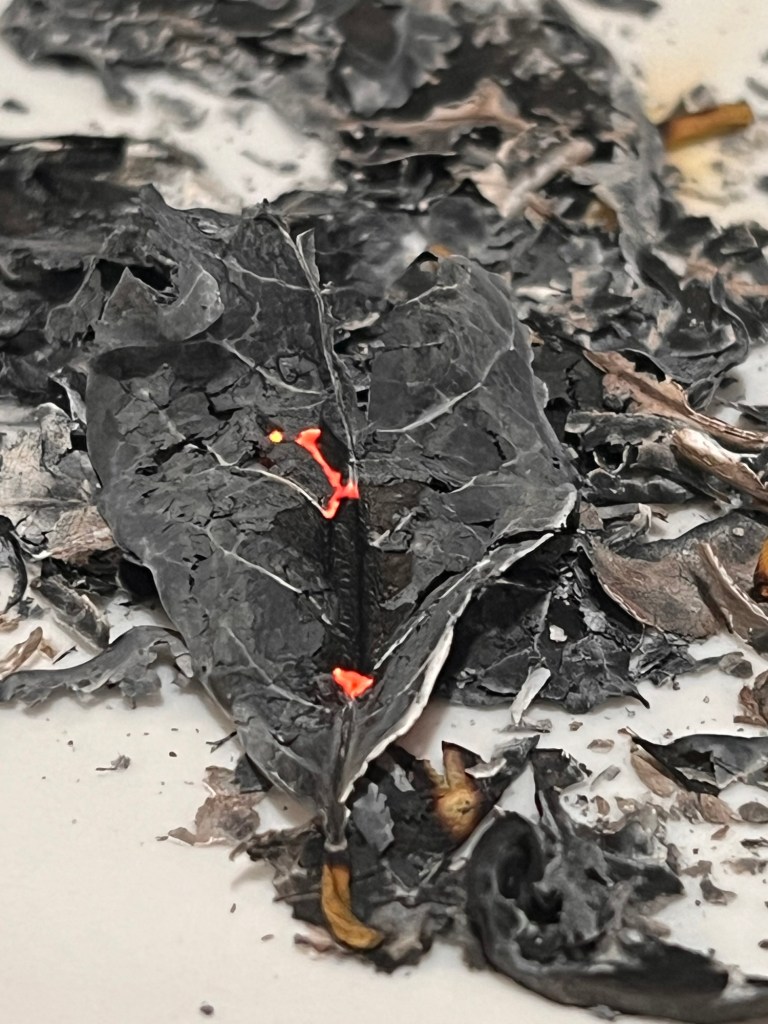
I watched the edges curl inward the leaf blacken the handwriting vanish before the wish did.
I have believed in candles. In numbers appearing twice. In dreams arriving before dawn. In songs playing at exactly the wrong moment and therefore meaning something.
I have asked the dead for signs.
I have left coffee where no living person would drink it.
But the bay leaf—
I believed in that one.
Maybe because it came from the kitchen.
Because it was ordinary.
Because it had spent its whole life being dropped into pots to make something taste deeper without ever being eaten.
There are things I wrote on those leaves that never came true.
People who did not stay.
Doors that remained closed.
Bodies that did not heal.
Love that arrived and still could not belong to me.
I used to wonder if I had done something wrong.
Used the wrong ink.
Burned it incorrectly.
Asked for too much.
Still—
every once in a while I open the cabinet and see the little glass jar.
Dry leaves pressed against one another.
Quiet.
Waiting.
And for one second I become the woman I was—
the one who believed the distance between wanting something and having it
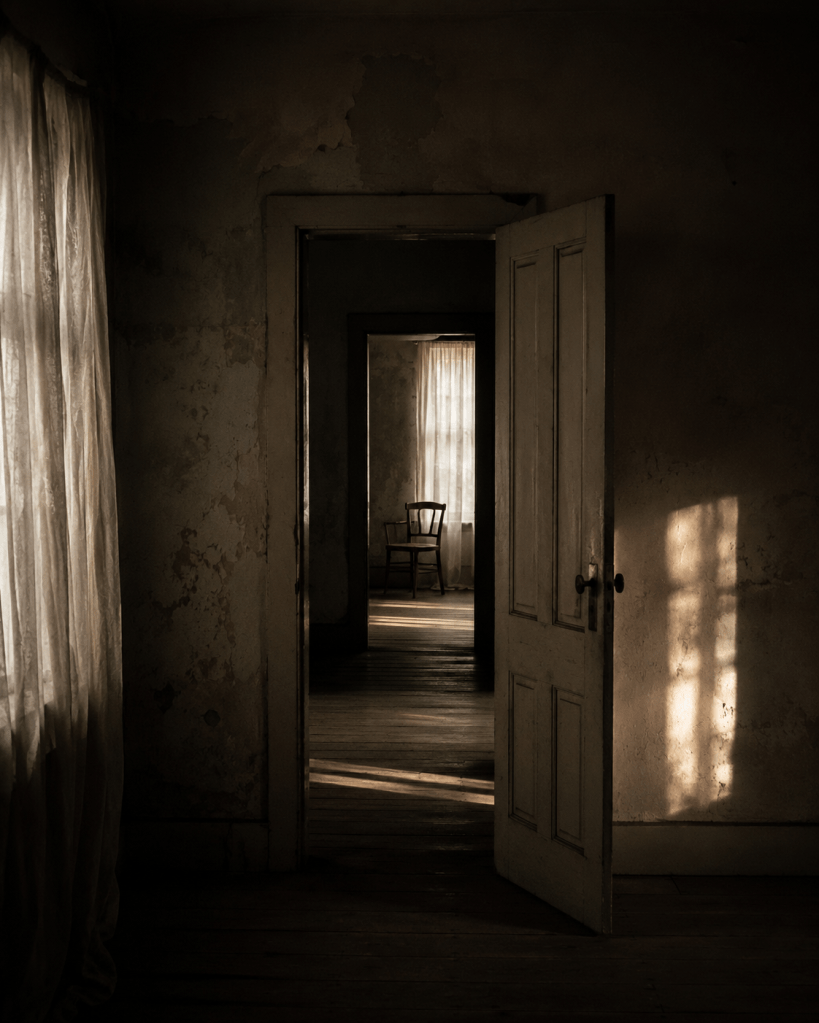
For as long as I can remember, my dreams have had architecture.
Not mountains. Not oceans.
Hallways.
Hospital corridors. Hotels. Schools I have never attended. Houses that belong to no one I know. Fluorescent lights. Closed doors. Numbers I cannot quite read.
There is always another room. I am always trying to find it.
Sometimes I know what is behind the door. Most of the time, I do not.
Lately, I have begun to wonder whether I have spent my entire life this way—not in rooms, but between them.
A hallway is not meant to be lived in. It exists only because there is somewhere else to go. No one chooses one as a destination. No one says, this is where I will stay.
And yet, so much of my life has happened there: in waiting, in becoming, in the long, unfinished passage between one version of myself and the next.
A few months after my father died of lung cancer in 2014, I had a dream.
I was inside a hospital. People were moving quickly through the corridors, rushing in and out of rooms, carrying papers, calling to one another. There were doors everywhere.
Someone stopped me and said they had pulled my father out for me. He was in a room down the hall.
Room 214, maybe.
A woman in scrubs caught my arm before I reached it.
They had found a cure, she told me.
Not for every cancer.
For his.
They had brought him back.
Even in the dream, I knew this was impossible. My father had been cremated. I remember thinking it clearly.
He was cremated.
But I followed her anyway.
Hope has never required evidence.
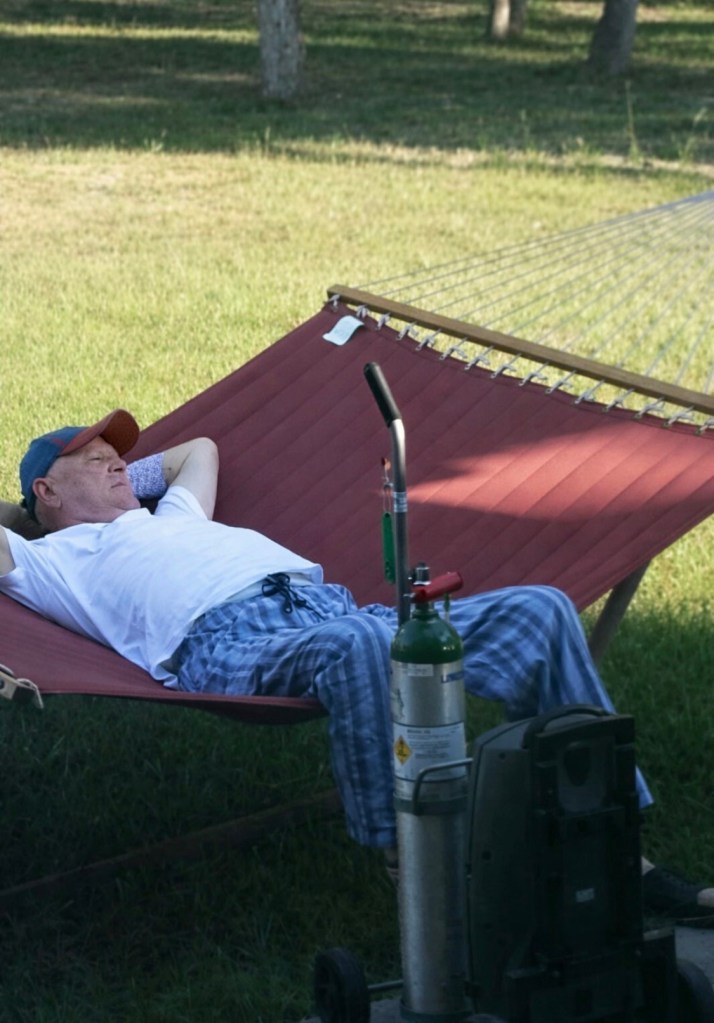
He was lying in a hospital bed, thin and fragile, the oxygen cannula still beneath his nose. He looked exactly as I remembered him near the end.
But he was breathing.
That was all I could see.
He was breathing.
I went to him as if I had been handed a miracle and was afraid it might be taken back if I asked too many questions.
I told him they had found a medicine. I told him it was saving people. I told him he did not have to die anymore.
He looked at me.
Then he reached for my hand.
He had very little strength, but his fingers closed around my wrist with surprising force.
“Let me rest,” he said.
Then he turned onto his side.
Underneath him were the ashes.
All of them.
Ashes beneath the body that was still breathing.
I woke terrified.
For years, I remembered the dream as a message about death. Now I am not sure it was.
Maybe the hallway had been there all along.
There have been many of them since: the corridor outside my father’s room, the hallway outside my sons’ bedrooms when they were still young enough to need me, the airport passage where one of them walked away in uniform and did not look like a child anymore, the narrow stretch of my own house after everyone has gone home, a restaurant after closing—chairs turned over, lights lowered, the day emptied out of it.
Even now, I am often standing somewhere between what was and what comes next.
Not grieving as I once did.
Not free of it either.
Not the woman I was.
Not yet the woman I am becoming.
A hallway.
The cruel thing about hallways is that you can still see the door behind you. Sometimes you can still hear voices through it.
But you cannot live there anymore.
I have spent years trying to return to rooms that no longer exist: the room where my father was alive, the room where my sons were children, the room where I believed love, if it was deep enough, would eventually become honest, the room where I knew who I was.
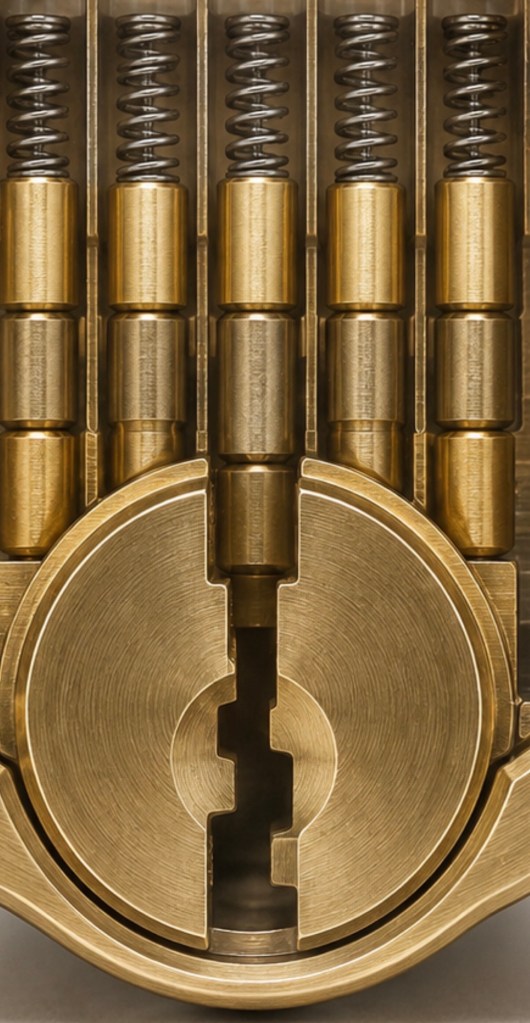
But memory is not a key.
It opens nothing.
It only lets you stand close enough to remember the shape of the handle.
Maybe that is why my dreams keep building hallways.
Rooms suggest arrival. They suggest certainty. They suggest that something has finally been decided.
Hallways do not lie that way.
They admit that we are between things. They admit that the person who enters is not always the person who comes out. They admit that sometimes there is no revelation on the other side.
Sometimes there is only another corridor.
Another number.
Another door.
I used to think transition meant I was lost. Now I think it may be the most honest place a person can stand—not where she was, not where she is going, but in the long passage between them.
And perhaps that is why my dreams never give me a destination.
I have spent so much of my life becoming someone else that my subconscious no longer bothers building rooms.
me arriving just before four in the morning with another part of my life still clinging to me.
You are already here. Already open. Already waiting.
As if you knew I would find my way back.
I always do.
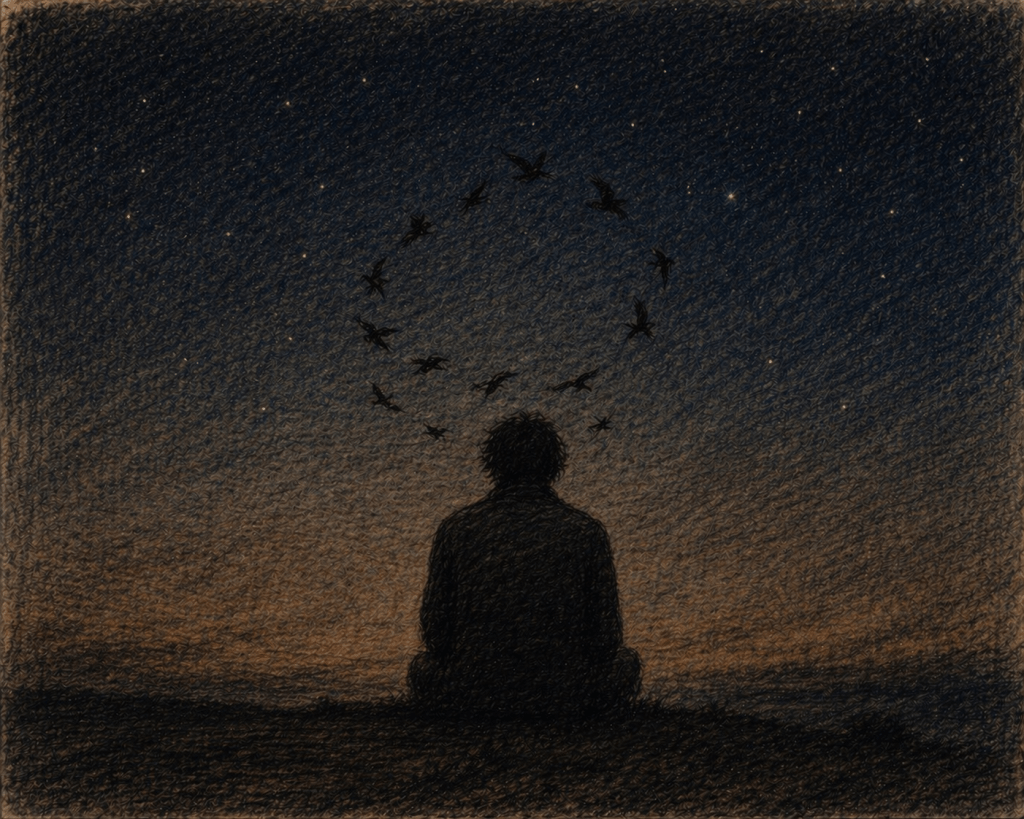
Not because I have something beautiful to say but because there are nights when language is the only place I can set something down without dropping it.
So I bring it here—
the conversations that refuse to end the silences that somehow say more the people who stay with me long after they’ve gone.
You have seen me do this before—
turn memory into metaphor grief into something I can look at without looking away.
You remember the woman who thought she had imagined her entire existence.
The one who searched old photographs looking for proof that she had once been alive.
You never corrected her. You never hurried her.
You simply waited.
Patiently enough that one day I stopped wondering whether I belonged here.
I should come to you with lighter things—
coffee my sons the morning sun finding the kitchen floor
ridiculous things my cats do that make me laugh when I wasn’t planning to.
I should tell you about the days that didn’t leave a bruise.
They smell like a wound drizzled by morning rain like dust lifting softly from pavement after weather like roses still carrying the cold breath of dawn
Not unpleasant
Just painfully alive
Ancient somehow
As though feathers preserve memories the body spends years trying to outlive
Strange how scent reaches the soul before thought does
One breath and suddenly the past becomes physical again
The ache gathering beneath the ribs the overwhelming feeling of having lost something beautiful long ago
That invisible meeting place between longing and recognition
The way certain scents return us not only to people but to former versions of ourselves
Softer selves unguarded ones the selves that still believed tenderness could exist without disappearance attached to it
And perhaps that is why birds unsettle me
Because when they cross the evening sky carrying the fragrance of rain and distance and earth something inside me rises toward them instinctively
Not joy exactly not sorrow either
But the unbearable remembrance of who I was before longing became part of my nature
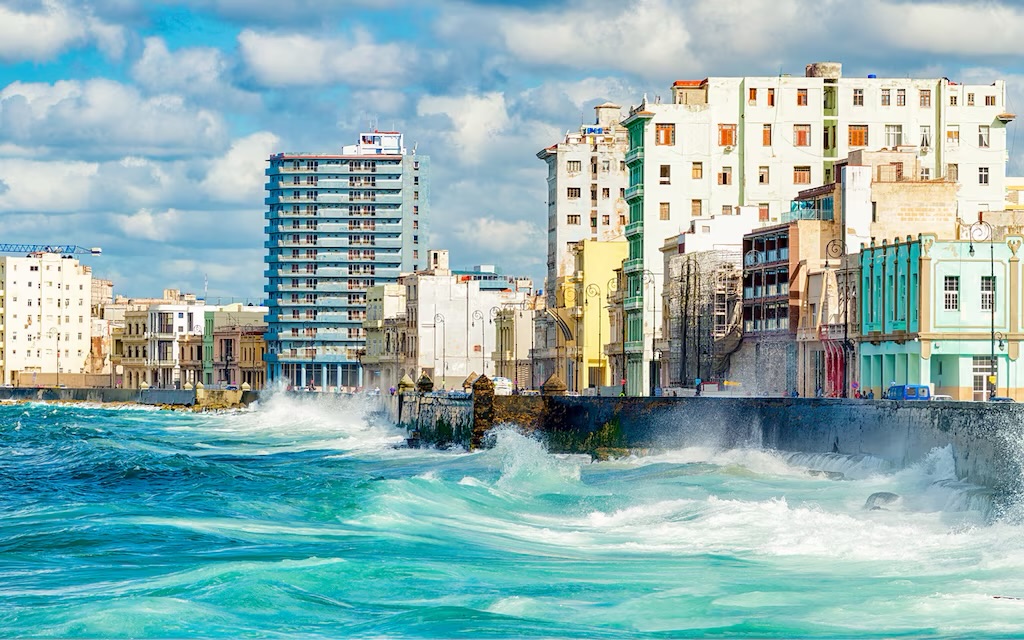
Two blocks of crumbling pavement past the embassies with their iron gates and foreign flags lifting beautifully in the Caribbean wind like freedom had an address and we did not
I remember the terrible contrast of it
chauffeurs polishing black cars while old women downstairs watered thin soup to feed five mouths
Diplomats drinking imported whiskey behind guarded glass while boys in torn sandals kicked flat soccer balls through alleyways smelling of salt kerosene and exhaustion
And yet the ocean belonged to everyone
That was the unbearable beauty of Cuba
The poor could stand at the Malecón at dusk beside men who had never missed a meal and both would fall silent before the same enormous water
Because the sea did not care who was oppressed and who carried a passport out
It touched every stone equally
At night the waves struck the seawall so hard the spray reached the streets cool against our faces like the island itself refusing to die quietly
I grew up understanding freedom not as politics
but as distance
As horizon
As the ache of watching ships become smaller and smaller until they dissolved completely into another life
Some nights the grownups lowered their voices when certain subjects entered the room
But the ocean the ocean never whispered
It roared openly beside us
Restless Uncontained
I think that is why Cubans carry sadness so elegantly
We were raised beside something infinite while living inside limitation
Raised hearing waves crash against stone over and over and over again
as if the earth itself believed no wall should remain standing forever
Even now far from that coastline I still need water near me
Not for leisure Not for beauty
For memory
Because somewhere inside me there is still a little girl walking toward the sea at twilight past embassies glowing gold past tired buildings collapsing inward past the unbearable divide between the free and the trapped
believing with her entire heart that the horizon meant there had to be more than this
I sit here digitally composing words across a screen while somewhere far away my son’s handwriting still exists on paper
creased softly at the folds forty-five days old already by the time it reached my hands
And nothing about modern life can compete with that
Not the blue glow of notifications Not the speed of a text arriving mid-thought Not the endless stream of people speaking without ever truly touching one another
Because ink carries the body with it
The pressure of his hand The pause between sentences The places where he pressed harder without realizing emotion had entered the page
I opened the envelope slowly like people used to open news from war carefully—reverently already afraid of loving it too much
And somehow this letter lifted my spirit in ways nothing else has been able to lately
For one suspended second I forgot distance Forgot oceans Forgot time zones and deployments and the unbearable mathematics of missing someone
I forgot the years moving forward
I was no longer standing in my kitchen holding paper beneath morning light
I was simply his mother again close enough to hear his voice in the next room close enough to believe love still travels faster than grief
And I wanted to archive this feeling somehow
Fold it carefully into a drawer Place it beside kindergarten photographs old report cards little league schedules the backpacks I could never throw away
As if tenderness could be preserved like pressed flowers between heavy pages
As if a mother could save a moment before life carried it off again
Because the terrible thing about joy is how quickly it understands it cannot stay
So I stood there quietly holding the letter against my chest like something alive
trying to memorize the exact shape of being needed the exact sound of my spirit returning to me through his handwriting
And for a moment this loud technological world disappeared
No algorithms No scrolling No noise
Only a mother standing silently holding proof that space and time are not always strong enough to keep the heart from returning home
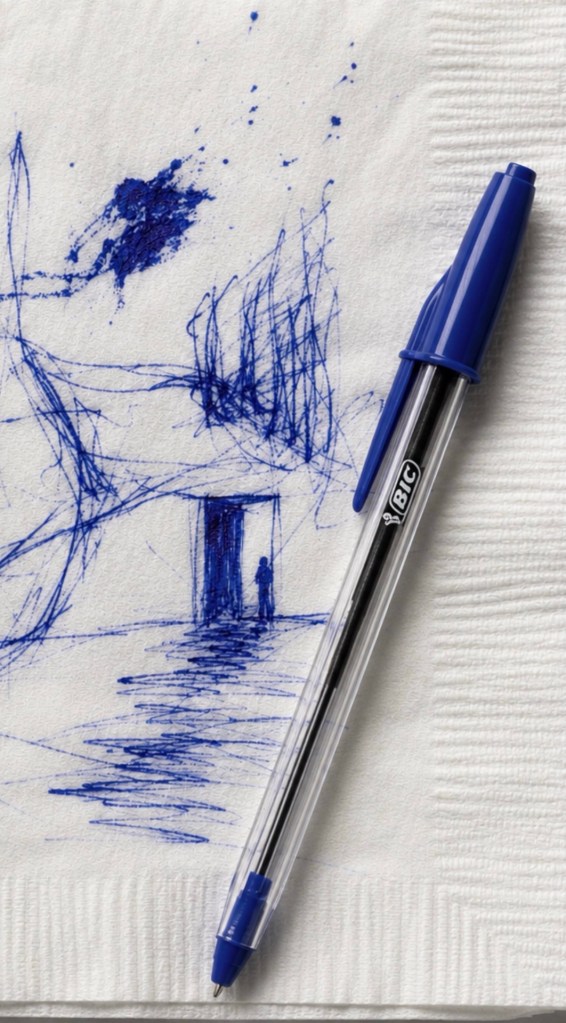
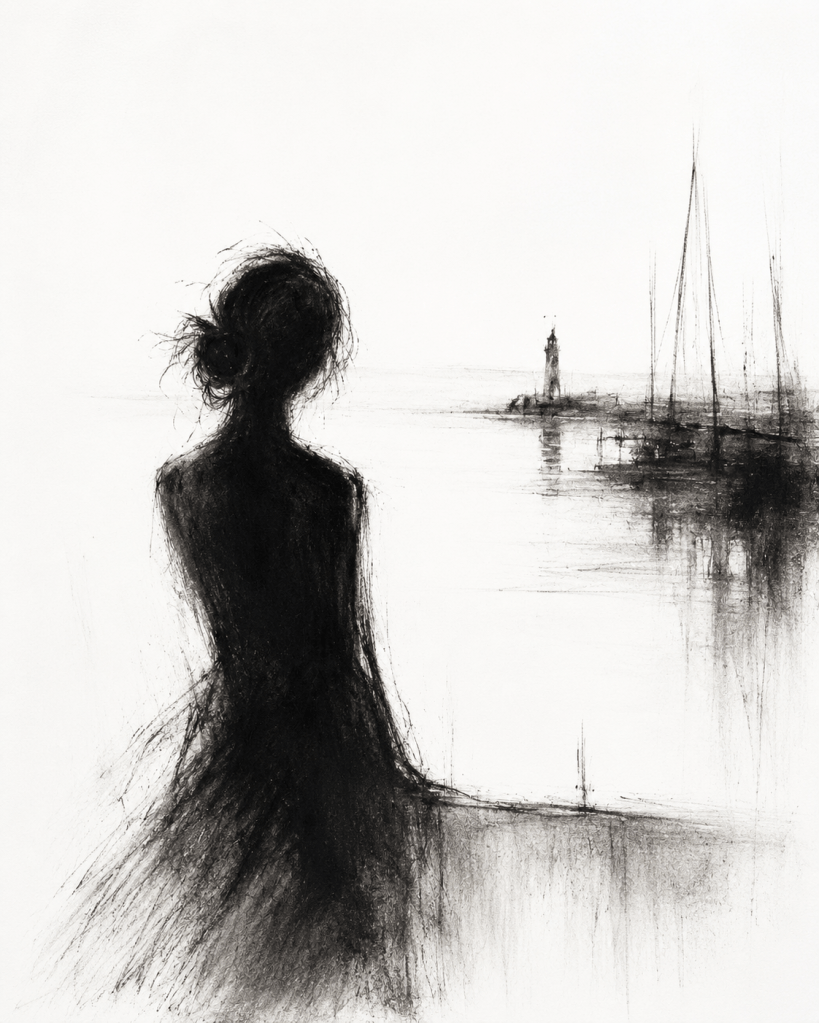
Has existed in art longer than memory itself waiting grieving remembering becoming
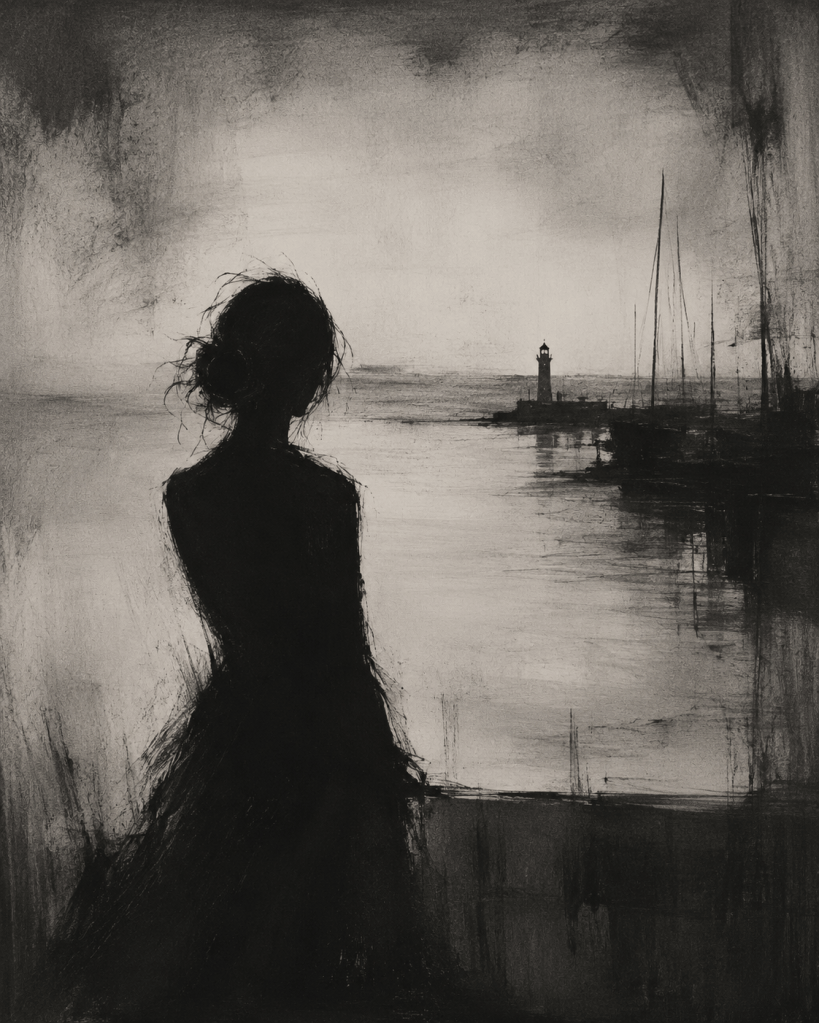
The harbor is not merely a place in these sketches It is the human condition the shoreline between staying and leaving
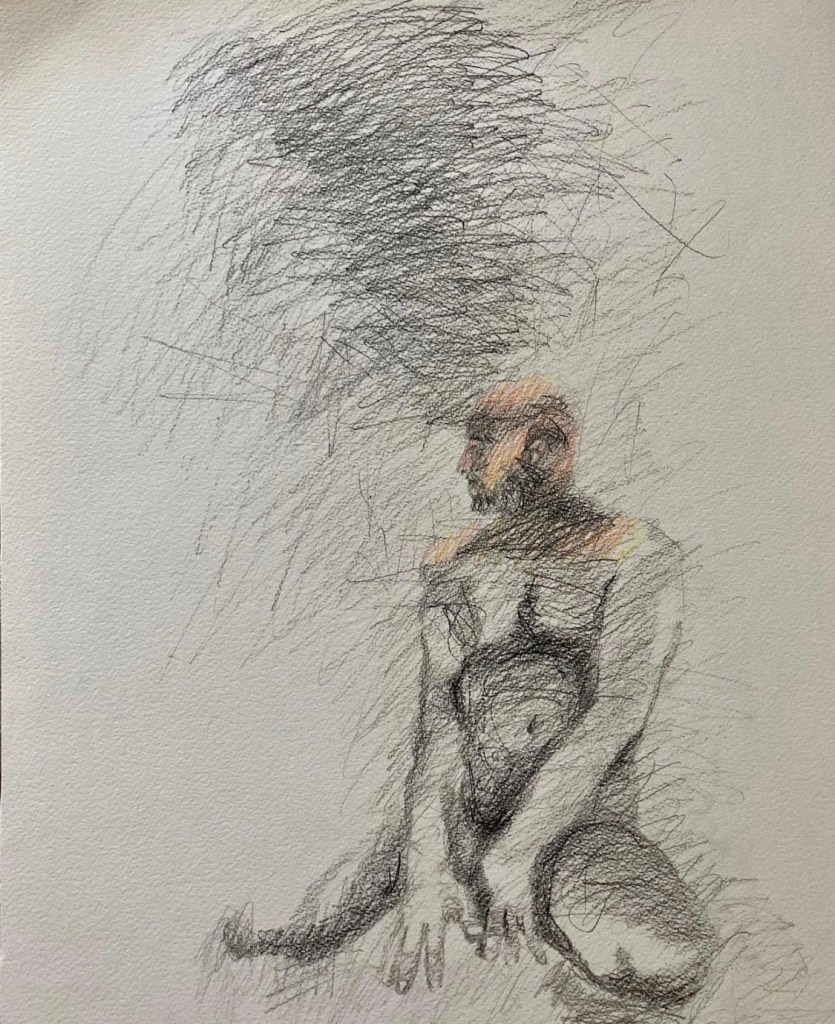
Smudging of a Harbor | Graphite
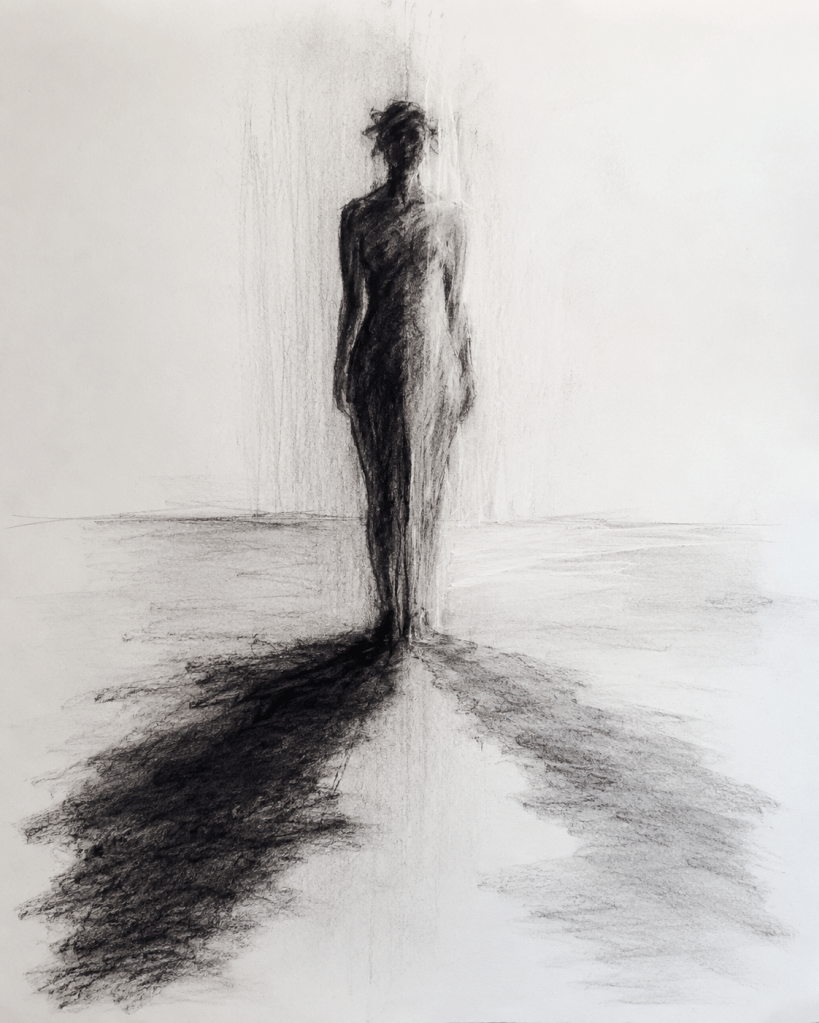
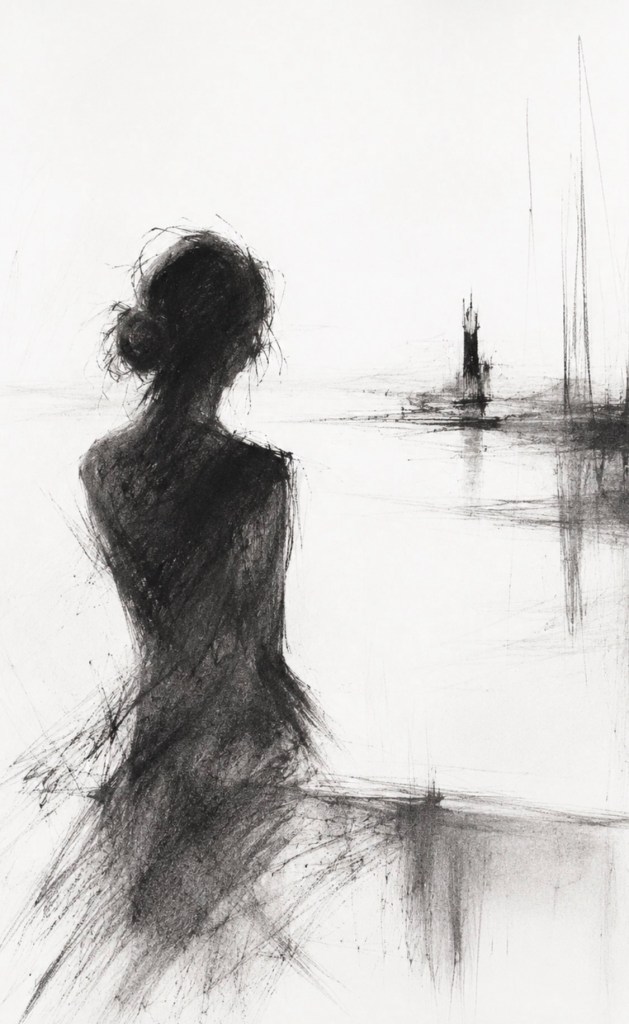
I drew the figure again and again in charcoal because charcoal behaves like memory it smudges disappears darkens where touched too often
And the lighthouse became abstract on purpose
Some people are not meant to be rendered clearly Some loves survive only in silhouette
“Harbor | Charcoal
So I kept stripping the image down less harbor less certainty more white space more silence until all that remained was a woman an ocean and the unbearable softness of standing still while something inside her kept drifting toward shore
And maybe that is why the body refuses to forget it.
Not the person exactly.
The atmosphere of them. The warmth left behind in certain rooms. The way silence changed when they entered it. The unbearable intimacy of standing too close while pretending not to notice.
And even now, years or hours or lifetimes later something remains.
Like the ghost of ambergris still clinging faintly to a collar or the wrist of someone passing too near—warm and mineral and devastatingly human.
The kind of scent that makes the body remember before the mind has time to defend itself.
Too late to ruin a life completely.
Yet somehow still capable of altering the pulse.
Because some connections never become ordinary enough to lose their sensuality.
They remain suspended living softly beneath the skin—where longing becomes indistinguishable from memory.
And perhaps that is why these loves endure.
Not because they lasted.
Because they never fully touched the ground.
Like desire itself trying very hard to remain civilized.
There is something about rain in the late afternoon that makes the heart unable to hide from itself.
Maybe it is the softened light. The sound of water moving through trees and gutters.
But the moment the rain begins, everything returns.
The people we loved. The people we lost. The lives we almost had. The tenderness we still carry despite ourselves.
And suddenly I feel everything.
Every person I have ever loved. Every version of myself that survived loneliness quietly. Every moment tenderness entered my life and left before I was ready.
For one impossible moment they all come back.
My sons as babies asleep against my chest, warm and safe. The sound of laughter moving through a house that once belonged to all of us.
And then the breaking of it.
The slow unbearable fracture of a little family I tried so hard to hold together with my bare hands.
A marriage that looked like a home from the outside but inside felt like disappearing quietly day after day. The exhaustion of surviving inside something that no longer allowed me to fully exist as myself. The terrible guilt of walking away. The terrible necessity of it too.
And sometimes, when it rains like this, I still wonder.
Should I have stayed? Should I have endured a little longer for the sake of my sons, the photographs, the illusion of wholeness?
But deep down I know remaining would have been its own kind of violence.
A slow crime against the self.
And so I left carrying both grief and freedom in the same trembling hands.
Rain brings all of it back.
Quietly.
The way grief actually lives inside the body.
You stand there listening to water move through the darkening afternoon while your phone stays silent beside you and suddenly the weight of being human feels almost unbearable.
Because love after fifty is no longer about fireworks.
It is about tenderness.
Someone remembering you. Someone noticing your exhaustion. Someone asking if you made it home safe in the rain.
And the heartbreaking thing is how little of that most people receive.
Most people are starving for softness while pretending they no longer need it. Most people are carrying invisible loneliness through conversations about ordinary things.
And still
The heart continues reaching.
Even after loss. Even after disappointment. Even after entire lives collapse and rebuild themselves around absence.
The heart remembers warmth and spends the rest of its life searching for it again.
Outside the rain keeps falling steadily and inside every lit room someone is remembering somebody they loved.
Someone gone. Someone distant. Someone they still carry quietly inside them.
And maybe that is why rain hurts so much because for a little while everyone we have ever loved feels close enough to touch again.






You must be logged in to post a comment.